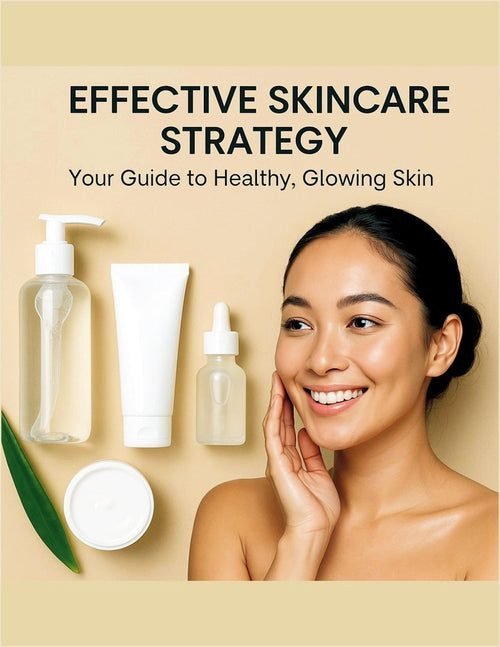
The skincare aisle at any drugstore is overwhelming. Rows of bottles in every color, promising everything from "age-defying" to "pore-refining" to "glass skin." The marketing language is designed to confuse — if you are not sure what you need, you buy more products. The industry thrives on the insecurity that your current routine is inadequate.
Here is the truth: effective skincare does not require a twelve-step routine or a collection of hundred-dollar serums. Your skin has four basic needs: cleanse, moisturize, protect, and (optionally) treat. Everything else is a variation on these four pillars. Master the fundamentals, and your skin will respond more reliably than it would to any exotic ingredient.
This guide covers the science-backed essentials: how to identify your skin type, build a minimalist routine that works, choose the right ingredients for your concerns, and avoid common mistakes that damage skin barrier and waste money.
Know Your Skin Type
Before buying any product, determine your skin type. This single piece of information determines which cleanser, moisturizer, and sunscreen will work for you. Using products formulated for the wrong skin type is the most common reason routines fail.
Normal skin: Balanced oil production, few imperfections, no severe sensitivity. Pores are small to medium. You can tolerate most products without irritation. Your goal is maintenance — gentle cleansing, balanced moisturizing, and consistent sun protection.
Dry skin: Feels tight after washing, flaky or rough texture, barely visible pores. Dry skin lacks natural oils and has a compromised moisture barrier. It ages faster because the barrier is less effective at retaining water. Look for creamy, non-foaming cleansers and rich moisturizers with ceramides, hyaluronic acid, and squalane.
Oily skin: Visible shine within hours of washing, enlarged pores, frequent breakouts. Oily skin is not inherently bad — it ages slower because the natural oils protect the barrier. The key is balancing oil without stripping. Use gel-based or foaming cleansers, lightweight moisturizers, and avoid heavy creams that clog pores.
Combination skin: Oily T-zone (forehead, nose, chin) with normal or dry cheeks. This is the most common skin type. Use a gentle cleanser that does not strip the cheeks while adequately cleaning the T-zone. You may need two moisturizers — a lightweight gel for the T-zone and a richer cream for the cheeks. Or find one balanced moisturizer that works for both.
Sensitive skin: Easily irritated by products, prone to redness, stinging, or breakouts. Sensitive skin requires fragrance-free, alcohol-free, minimal-ingredient products. Look for labels that say "for sensitive skin" and patch test everything for at least a week before full application.
The Essential Three-Step Routine
A complete skincare routine needs only three steps. Everything else is optional. If you do these three consistently, your skin will be healthier than 90% of people using complicated routines inconsistently.
Step 1: Cleanse (morning and night). Morning cleansing removes sweat and oil accumulated overnight. Night cleansing removes sunscreen, pollution, makeup, and the day's buildup. Use lukewarm water — hot water strips natural oils. Massage the cleanser gently for 30-60 seconds, rinse, and pat dry with a clean towel. Do not scrub or rub.
Step 2: Moisturize (morning and night). Moisturizer does not add water to your skin; it prevents water from leaving. A good moisturizer contains humectants (attract water to the skin), emollients (smooth the skin surface), and occlusives (seal in moisture). Apply to damp skin within 60 seconds of cleansing for maximum absorption.
Step 3: Protect (morning only). This is the non-negotiable step. UV radiation is responsible for approximately 80% of visible skin aging — wrinkles, dark spots, loss of elasticity. Use a broad-spectrum sunscreen with SPF 30 or higher every single day, even when it is cloudy or you are indoors. Windows let in UVA rays. Reapply every two hours if exposed to direct sun.
That is the core routine. Morning: cleanse, moisturize, sunscreen. Night: cleanse, moisturize. If you do nothing else, this routine prevents most common skin problems and slows aging significantly.
Active Ingredients: What Actually Works
Once the basic routine is consistent, active ingredients address specific concerns: aging, hyperpigmentation, acne, or dullness. Here are the ingredients with the strongest scientific backing:
Vitamin C (L-ascorbic acid): A powerful antioxidant that neutralizes free radicals from UV exposure and pollution. It also brightens skin tone and stimulates collagen production. Use in the morning before moisturizer and sunscreen. Concentrations of 10-20% are effective. Store in a dark, airtight bottle — vitamin C degrades rapidly when exposed to light and air.
Retinoids (retinol, tretinoin, adapalene): The gold standard for anti-aging and acne treatment. Retinoids speed up cell turnover, stimulate collagen, and prevent clogged pores. Use only at night — retinoids make skin photosensitive. Start with low concentration (0.25-0.3% retinol) once or twice a week, gradually increasing frequency. Expect a "purge" period of 4-6 weeks where breakouts temporarily increase before improving.
Niacinamide (vitamin B3): A versatile ingredient that strengthens the skin barrier, reduces redness, minimizes pore appearance, and regulates oil production. It works well with most other ingredients and causes minimal irritation. Concentrations of 2-5% are effective; higher percentages may cause flushing in sensitive individuals.
Salicylic acid (BHA): An oil-soluble exfoliant that penetrates deep into pores to dissolve sebum and dead skin cells. It is the most effective ingredient for blackheads and whiteheads. Use 2% concentration 2-3 times per week, ideally at night. Do not use with other exfoliants (glycolic acid, physical scrubs) on the same day.
Hyaluronic acid: A humectant that holds up to 1,000 times its weight in water. It plumps the skin and reduces the appearance of fine lines. Apply to damp skin before moisturizer for maximum benefit. Works for all skin types and all climates. Look for serums with multiple molecular weights for deeper penetration.
A 2019 systematic review in the Journal of Clinical Medicine analyzed over 30 clinical trials on topical vitamin C and concluded it significantly improves photoaging, pigmentation, and collagen synthesis when used consistently at concentrations above 10%. The evidence for retinoids is even stronger — dozens of randomized controlled trials confirm their anti-aging efficacy.
Building a Routine for Your Concerns
Once you understand the basics and active ingredients, you can build a targeted routine. Here are evidence-based routines for common skin concerns:
For anti-aging: Morning — gentle cleanser, vitamin C serum, moisturizer, SPF 30+. Night — gentle cleanser, retinol (start low, increase gradually), rich moisturizer. The combination of vitamin C (morning antioxidant protection) and retinol (night collagen stimulation) is the most effective non-prescription anti-aging protocol.
For acne-prone skin: Morning — salicylic acid cleanser (2%), niacinamide serum, oil-free moisturizer, SPF 30+ (gel-based, non-comedogenic). Night — gentle cleanser, benzoyl peroxide spot treatment (2.5-5% on active breakouts only), moisturizer. Avoid over-exfoliating — it damages the barrier and worsens acne. Consistency for 8-12 weeks is needed before judging effectiveness.
For hyperpigmentation / dark spots: Morning — gentle cleanser, vitamin C serum, moisturizer, SPF 50 (sunscreen is essential for treating pigmentation — UV exposure triggers melanin production and undoes all treatment progress). Night — gentle cleanser, retinol or azelaic acid (alternate nights), moisturizer. Pigmentation treatment requires patience — visible improvement takes 3-6 months.
For sensitive / barrier-damaged skin: Strip your routine to the absolute minimum: gentle, non-foaming cleanser (once daily at night; rinse with water in the morning), barrier-repair moisturizer (ceramides, panthenol, squalane, oats), mineral sunscreen (zinc oxide or titanium dioxide — less irritating than chemical filters). No actives (no vitamin C, retinol, acids) for at least 4-6 weeks until the barrier recovers.
Common Skincare Mistakes
1. Over-cleansing: Using harsh cleansers, scrubbing vigorously, or washing more than twice daily strips the skin barrier. A damaged barrier leads to increased sensitivity, breakouts, and dehydration. If your skin feels tight or squeaky after cleansing, your cleanser is too harsh. Switch to a gentle, non-foaming formula.
2. Skipping sunscreen: This is the most expensive mistake you can make. Every dollar spent on serums and treatments is wasted if you are not using sunscreen daily. UV damage reverses the effects of anti-aging ingredients. Sunscreen is not optional — it is the foundation of every effective routine.
3. Too many active ingredients: Using retinol, vitamin C, acids, and benzoyl peroxide simultaneously is a recipe for irritation. Introduce one active at a time, use it consistently for 4-6 weeks, then add another. Some ingredients (like retinol and acids) should not be used on the same night.
4. Expecting overnight results: Skin cell turnover takes 28-40 days. Visible improvement from any active ingredient takes at least 8-12 weeks of consistent use. If you switch products every two weeks because you do not see results, you will never see results. Pick a routine, stick with it, and be patient.
5. Applying products in the wrong order: The general rule is thinnest to thickest. After cleansing, apply water-based products (serums, ampoules) first, then oil-based products (moisturizers), then sunscreen. Each layer should be mostly absorbed before applying the next — wait about 30-60 seconds between steps.
Skincare is not about perfection. Some days you will skip steps, fall asleep without washing your face, or try a product that breaks you out. That is normal. What matters is consistency over time. A simple routine done daily outperforms a complex routine done sporadically. Find the products that make your skin feel good, stick with them, and give it time. For product recommendations, ingredient guides, and routine builders tailored to your skin type, visit Glow Guide's Skincare Section.