Parenting today is more complex than ever. Between digital devices, social pressures, and the constant flow of conflicting advice, modern parents face challenges that previous generations could not have imagined. Yet the fundamental needs of children remain unchanged: they need love, structure, and guidance to thrive.
Effective parenting is not about finding the perfect technique or following a single philosophy. It is about building a toolkit of strategies that you can adapt to your child's temperament, your family values, and the specific situation. This guide covers evidence-based approaches that work across ages and circumstances.
Authoritative Parenting: The Sweet Spot
Decades of research in developmental psychology have identified four main parenting styles: authoritative, authoritarian, permissive, and uninvolved. Of these, authoritative parenting consistently produces the best outcomes for children across cultural contexts.
Authoritative parenting combines high warmth with high expectations. You set clear boundaries and enforce them consistently, but you also explain the reasoning behind rules and remain open to discussion. Children raised by authoritative parents tend to have higher self-esteem, better emotional regulation, stronger academic performance, and healthier social relationships.
The key distinction from authoritarian parenting (high expectations, low warmth) is the presence of explanation and emotional support. When a child understands why a rule exists, they internalize the value rather than simply complying to avoid punishment. This internalization is what leads to lasting self-discipline.
A landmark study published in the journal Child Development found that authoritative parenting is associated with better adjustment in children across diverse ethnic and socioeconomic groups, making it one of the most robust findings in parenting research.
Setting Boundaries That Stick
Boundaries are essential for children's sense of security. Knowing there are limits creates a predictable environment where children feel safe enough to explore and learn. The challenge is setting boundaries that are firm enough to be effective without being so rigid that they damage the parent-child relationship.
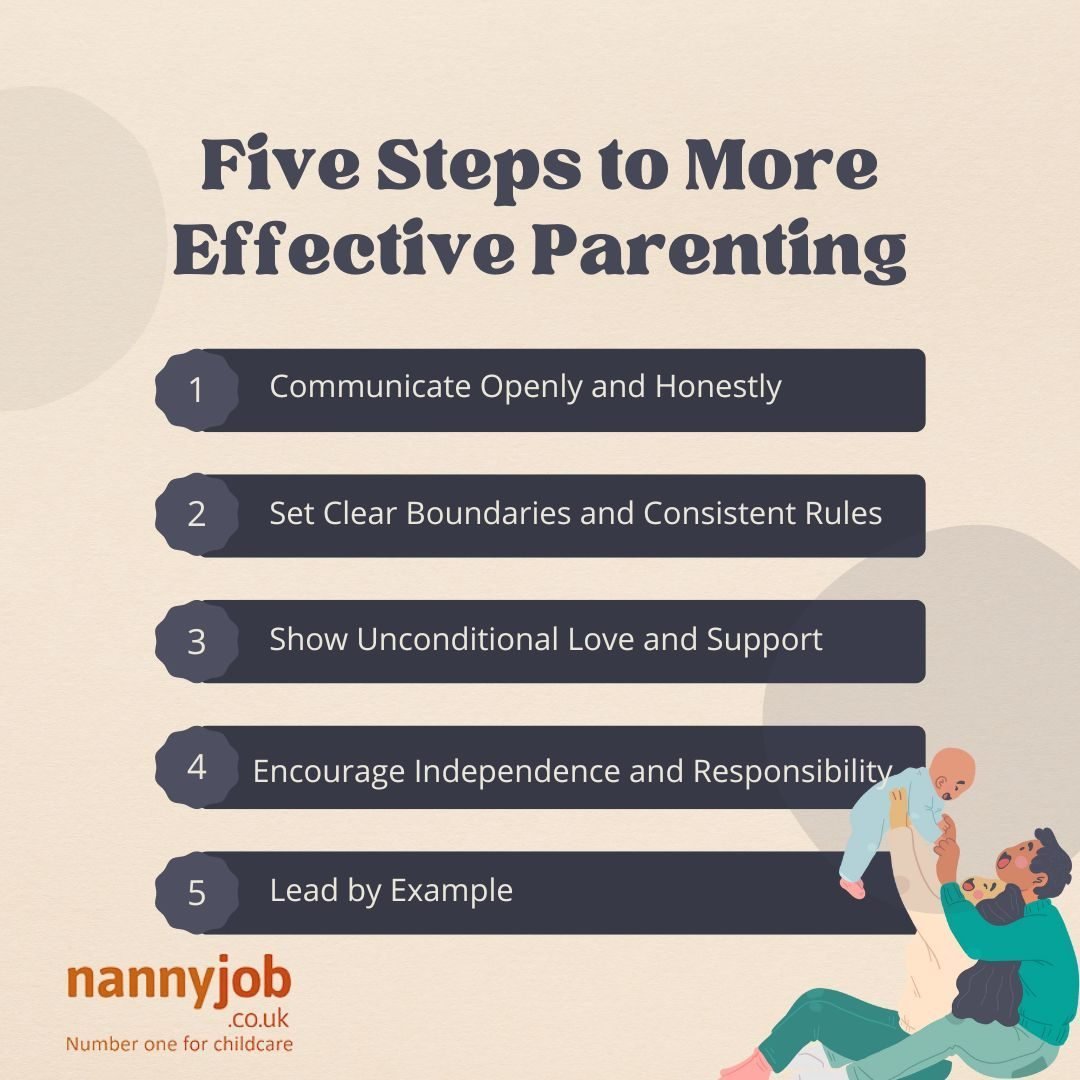
Effective boundaries share several characteristics. They are clear and specific rather than vague. They are consistently enforced — inconsistency confuses children and teaches them that rules are negotiable. They are age-appropriate, evolving as your child matures. And they come with explanations that help children understand the underlying value.
Natural consequences are a powerful tool. If a child refuses to wear a coat, they will be cold. If they leave a toy outside, it may get damaged. Allowing children to experience the natural results of their choices — within safe limits — teaches responsibility more effectively than lectures or punishments.
Managing Screen Time in a Digital World
Screens are everywhere, and completely eliminating them is neither realistic nor necessary. The goal is intentional use rather than passive consumption. Set clear guidelines around when, where, and how long screens can be used. Common approaches include no screens during meals, no devices in bedrooms overnight, and screen time only after homework and chores are complete.
Content quality matters as much as quantity. Educational apps, creative tools like drawing or music apps, and age-appropriate shows co-watched with a parent provide more value than mindless scrolling or algorithm-driven videos. Be involved in your child's digital life — know what they are watching, who they are talking to, and how they feel about their online experiences.
Perhaps the most important strategy is modeling. Children learn more from what you do than what you say. If you want your child to put down their phone, put down yours first. Create family routines that prioritize connection over screens — game nights, outdoor adventures, shared meals without devices.
Building Emotional Intelligence
Emotional intelligence — the ability to recognize, understand, and manage emotions — is a stronger predictor of life success than IQ. Parents play a crucial role in developing this skill. Start by helping your child name their emotions. "You seem frustrated that your tower fell down" gives them vocabulary for their experience.
Validate all emotions, even uncomfortable ones. "It's okay to be angry. Everyone gets angry sometimes. Let's talk about what happened." Validation does not mean permission for destructive behavior — you can acknowledge the feeling while setting limits on the action. "You are angry, and that is okay. It is not okay to hit."
Problem-solve together. Once the emotional intensity has passed, guide your child through identifying solutions. This builds the neural pathways for self-regulation and teaches that emotions are manageable signals, not overwhelming forces.
Maintaining Your Own Well-Being
Parenting is demanding, and parental burnout is real. You cannot pour from an empty cup. Prioritizing your own physical and mental health is not selfish — it is essential for being the parent you want to be. Protect time for sleep, exercise, social connection, and activities that recharge you.
Seek support when you need it. Parenting is not meant to be done in isolation. Trusted friends, family members, parenting groups, and professional counselors are all valuable resources. Asking for help is a sign of strength, not weakness.
Parenting strategies are tools, not prescriptions. Take what works for your family and leave the rest. The goal is not perfection but connection. A warm, responsive relationship with your child is the single most protective factor in their development, outweighing any specific technique or approach.
Positive Discipline: Teaching, Not Punishing
Discipline comes from the Latin word for teaching, and the most effective approaches reflect this origin. Positive discipline focuses on teaching children appropriate behavior rather than punishing mistakes. The goal is to help children develop internal self-control and understanding, not compliance through fear.
Natural and logical consequences are central to this approach. A natural consequence happens without adult intervention — if a child refuses to wear a coat, they feel cold. A logical consequence is directly related to the behavior — if a child makes a mess, they help clean it up. Both are more effective than arbitrary punishments like taking away screen time for a completely unrelated behavior.
Time-in is an alternative to time-out that has gained support from child development experts. Instead of isolating a child when they are dysregulated, time-in involves sitting with them, helping them calm down, and then discussing what happened. This approach maintains connection while still addressing the behavior, teaching emotional regulation rather than suppression.
For more parenting resources, expert advice, and community support, visit Raising Roots, where you will find a library of articles covering everything from toddler discipline to teenage communication.