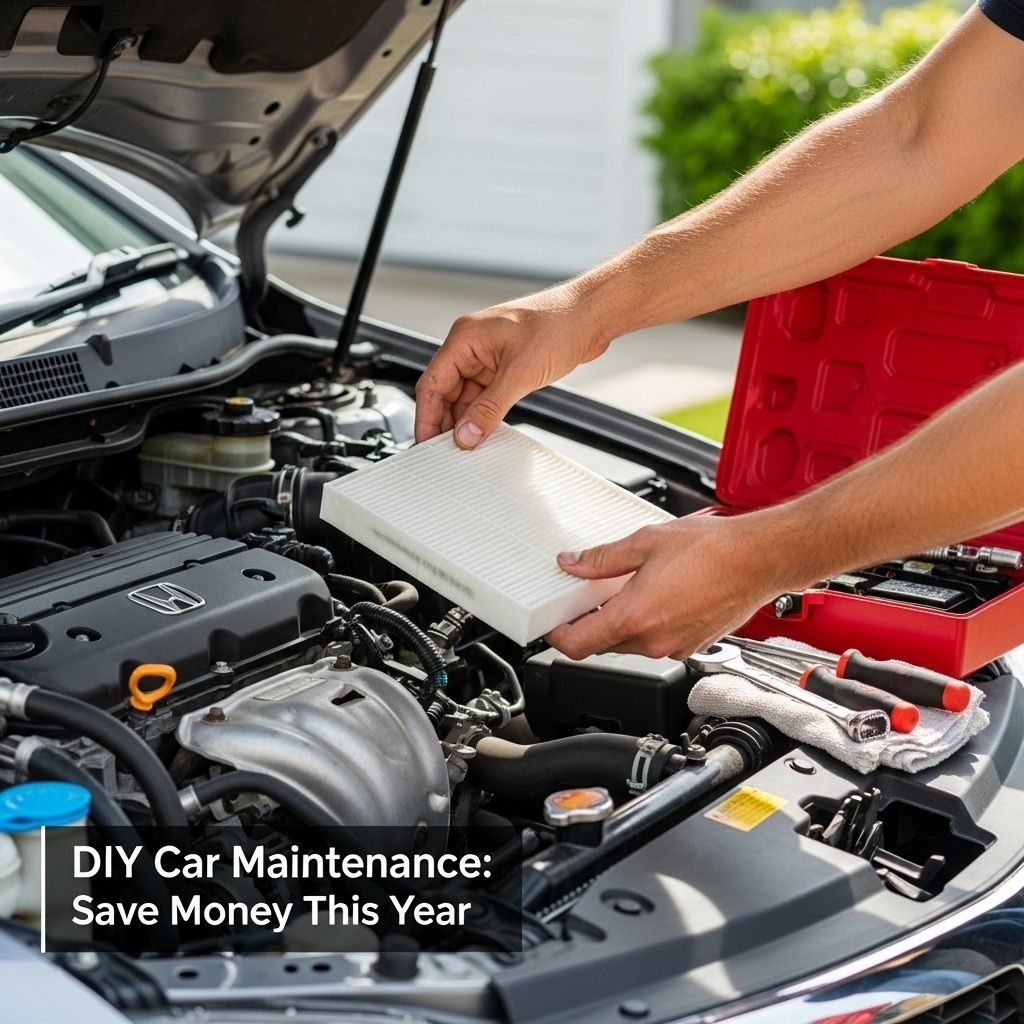
Regular car maintenance is the single most effective way to keep your vehicle reliable, safe, and valuable. Yet many drivers avoid basic maintenance tasks, either because they seem complicated or because it is easier to hand the keys to a mechanic and hope for the best. The truth is that several essential maintenance tasks are surprisingly simple and require only basic tools and a willingness to learn. Performing these tasks yourself saves hundreds of dollars per year and gives you a deeper understanding of your vehicle's health.
This guide covers the car maintenance tasks that every driver can and should learn. We cover oil changes, tire care and rotation, fluid checks, brake inspection, battery maintenance, air filter replacement, and seasonal preparation. These tasks cover the most common maintenance needs and address the causes of the majority of roadside breakdowns. You do not need to be a professional mechanic to keep your car running well. You just need the right information and a little bit of regular attention.
Oil Changes: The Foundation of Engine Health
Engine oil is the lifeblood of your car. It lubricates moving parts, reduces friction, carries heat away from critical components, and suspends contaminants so they can be trapped by the oil filter. Over time, oil breaks down and becomes less effective. Regular oil changes are the most important maintenance task you can perform for engine longevity. The frequency depends on your vehicle and driving conditions. Most modern cars using synthetic oil need oil changes every 7,500 to 10,000 miles. Older vehicles with conventional oil typically require changes every 3,000 to 5,000 miles. Always follow your owner's manual recommendation, which is based on engineering testing rather than commercial interest.
Changing your own oil is straightforward. You will need the correct oil and filter for your vehicle, a wrench to remove the drain plug, an oil filter wrench, a drain pan, and a funnel. Warm up the engine briefly to thin the oil, then safely raise the vehicle using jack stands or ramps. Never work under a car supported only by a jack. Remove the drain plug and let the oil drain completely into the pan. Replace the oil filter, ensuring the old gasket comes off with it. Install the new filter, lubricating the gasket with fresh oil. Replace the drain plug, fill with the correct quantity of new oil, and check the dipstick to confirm the level. Dispose of used oil responsibly at any auto parts store, which accepts it for recycling at no charge.
According to the Car Care Council, 22 percent of vehicles have low or dirty engine oil, which is one of the most common causes of premature engine failure. Regular oil changes are the cheapest insurance you can buy for your engine, costing roughly $30 to $40 for DIY versus $60 to $100 at a quick-lube shop.
Tire Care: Safety, Efficiency, and Longevity
Your tires are the only part of your car that contacts the road. Their condition directly affects braking distance, handling, fuel economy, and safety. The most basic tire maintenance task is checking and maintaining proper inflation pressure. Under-inflated tires wear faster on the edges, reduce fuel economy by up to 3 percent, and generate excess heat that can lead to tire failure. Over-inflated tires wear prematurely in the center and provide less traction.
Check tire pressure monthly using a quality tire gauge. The correct pressure for your vehicle is listed on a sticker in the driver's door jamb, not on the tire sidewall. Check pressure when tires are cold, meaning the vehicle has not been driven for at least three hours. Inspect tread depth using the penny test. Insert a penny into the tread with Lincoln's head facing down. If you can see the top of Lincoln's head, the tread is below 2/32 of an inch and the tire needs replacement. Rotate your tires every 5,000 to 8,000 miles to ensure even wear across all four positions. Most tire shops perform rotations at minimal cost, or you can do it yourself with a jack, jack stands, and a torque wrench.
Fluid Checks: The Easy Monthly Habit
Your vehicle relies on multiple fluids to operate safely and efficiently. Checking them regularly takes about five minutes and can identify problems before they become expensive repairs. Engine oil should be checked with the dipstick when the engine is cold or has been off for a few minutes. The oil level should be between the minimum and maximum marks, and the oil should appear amber to light brown, not dark or gritty.
Coolant, also called antifreeze, should be checked in the translucent reservoir when the engine is cold. The level should be between the minimum and maximum marks and the fluid should be bright green, orange, or pink depending on the type. Never open the radiator cap when the engine is hot, as pressurized coolant can cause severe burns. Brake fluid is visible through the master cylinder reservoir, which is usually mounted on the firewall near the driver's side. The fluid should be clear to light amber and at the proper level. Dark brake fluid indicates contamination and requires replacement. Windshield washer fluid is the simplest to maintain. Keep the reservoir full, especially during winter and spring when road grime and bugs are most prevalent.
Brake Inspection and Battery Care
Brakes naturally wear over time, and catching worn components early saves money and improves safety. Listen for squealing sounds, which are produced by wear indicators built into the brake pads. Grinding noises indicate the pads are completely worn and metal-to-metal contact is occurring, damaging the rotors. If you feel a pulsation through the brake pedal or the car pulls to one side during braking, have the brakes inspected immediately. Check brake fluid level as described above, as a dropping level may indicate worn pads or a leak.
Car batteries typically last three to five years. Keep the terminals clean and free of corrosion, which appears as a white or bluish powder. Clean terminals with a wire brush and a mixture of baking soda and water. Ensure the battery is securely mounted, as vibration can damage internal plates. If your battery is more than four years old, have it tested annually, especially before winter when cold temperatures reduce battery capacity significantly. Many auto parts stores offer free battery testing. If you need to jump-start your car, follow the proper procedure: connect positive to positive, negative to a metal ground point on the dead vehicle, start the running vehicle, then start the dead vehicle. Keep the order correct to avoid electrical damage.
Regular maintenance is an investment in your car's reliability and your safety. Spending a few minutes each month on these basic tasks can prevent breakdowns, extend the life of your vehicle, and save thousands of dollars in repair costs over the life of your car. The tools and supplies needed are minimal, and the knowledge gained makes you a more confident and capable car owner.
For detailed car maintenance guides, video tutorials, and vehicle-specific advice, visit AutoPulse. You will find practical resources to help you keep your car running smoothly for years to come.